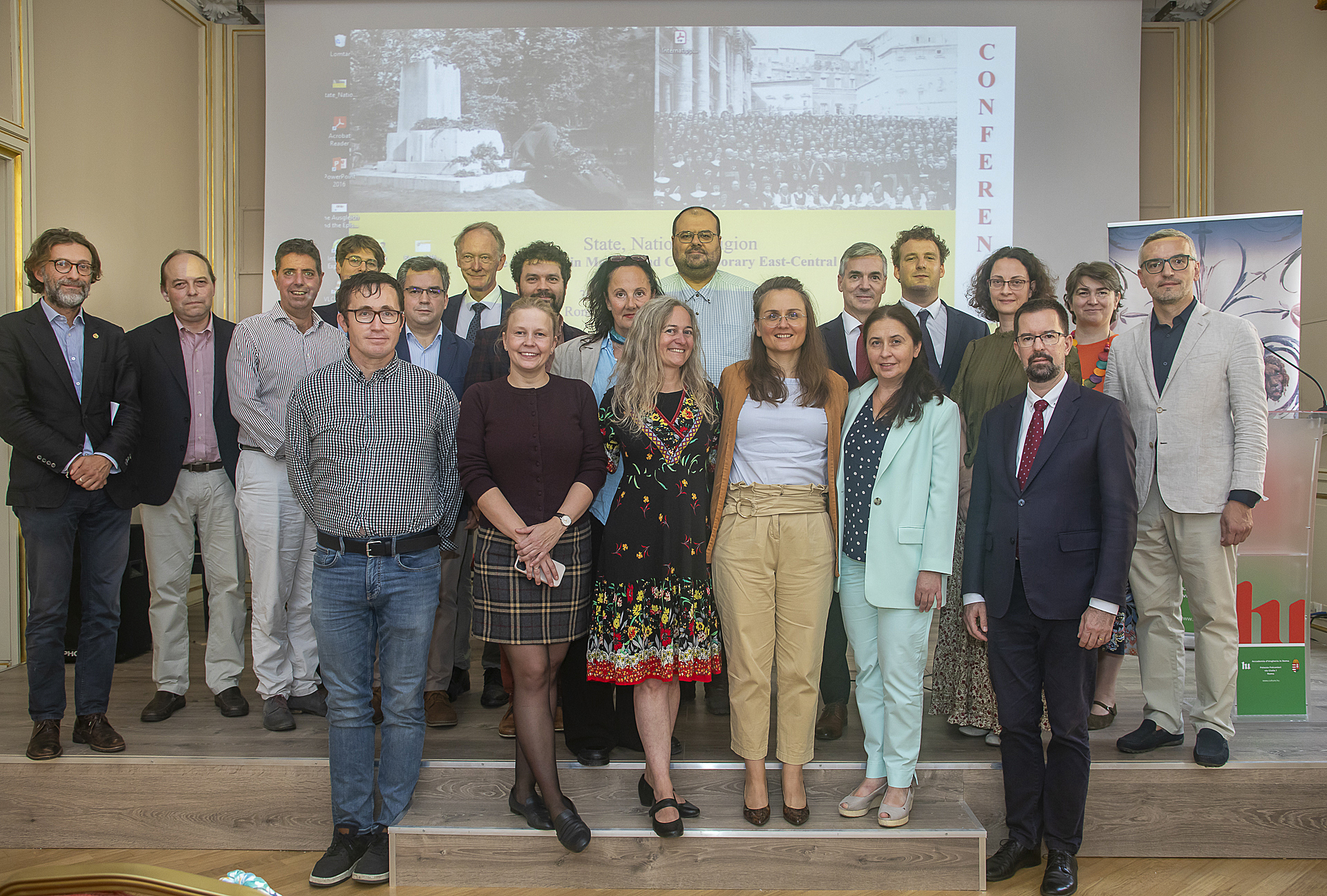
The “Negotiating Sovereignty” ERC research group has been working for four years now at ELTE HTK Institute of History, led by András Fejérdy. The aim of the project is to analyze state-church relations in the Habsburg Empire and its successor states through a long-term study of a specific institution: the episcopal oath of loyalty. The research group has organized two international conferences. While last year’s event in Budapest explored the European context of the above-mentioned oaths of allegiance, this year in Rome, members of the research group and influentianlscholars in the field examined the interrelationships between the Catholic Church, the state(s), and national movements
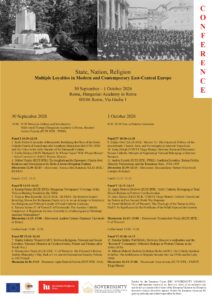
The conference “State, Nation, Religion: Multiple Loyalties in Modern and Contemporary East-Central Europe” took place on September 30 and October 1 at Palazzo Falconieri, the seat of the Hungarian Academy in Rome, in cooperation with the institution. On the first day, following introductory remarks by the Academy’s director, Márk Aurél Érszegi, and András Fejérdy, the audience discussed presentations analyzing state-church relations during the “long 19th century” and the transfer of sovereignty to the new states. In his presentation, Radu Nedici examined the episcopate of Ioan Bob of Blaj, a tenure that fundamentally shaped the character of the Greek Catholic Church in the period between Josephinism and Vormärz. Zsófia Bárány discussed national, dynastic, and ecclesiastical loyalties of the Bishop of Cenad (Csanád), József Lonovics, in the context of his 1840–1841 mission to Rome aimed at resolving the issue of mixed marriages. Miklós Tömöry held a presentation on the Hungarian ecclesiastical-political regime established after 1867 and the interpretations of the right of supreme patronage. Katalin Pataki’s paper examined the role of Titular Bishop János Danielik in the founding and operations of Langrand-Dumonceau’s “Catholic bank.” Tomasz Hen-Konarski’s presentation revealed the ideological and ecclesiastical background of the Greek Catholic boarding house opened in Lviv in 1881, highlighting the role of the Resurrectionist monk Walerian Kalinka. Tamara Scheer discussed national and religious interpretive frameworks surrounding the Austrian Catholic congresses (Katholikentage) held in the late 19th and early 20th centuries. In his comparative analysis, Martin Schulze Wessel evaluated the activities of the Polish, Czech, and Ukrainian national churches established during the interwar period, alongside the “Living Church” in the Soviet Union, paying particular attention to the issue of ecclesiastical authority. Finally, Przemysław Pazik analyzed the policies of two Polish governments toward Andrey Sheptytsky, the Greek Catholic Archbishop of Lviv who had – before returning to his seat in 1923 – previously championed Ukrainian independence.
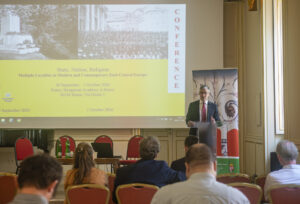
The second day, dedicated to 20th-century history, began with a presentation by Željko Oset, analyzing the correspondence between the lower clergy in Yugoslav border regions and the authorities of the South Slavic state during the transition of sovereignty, focusing particularly on the issue of clerical benefices. Ionuţ Biliuţă examined the debates taking place in Romania during the 1920s and 1930s regarding the relationship between the Romanian nation and the Greek Catholic and Orthodox churches. Assessing the forced resignation of István Fiedler, the Bishop of Satu Mare in 1939, András Fejérdy analyzed the disputes concerning national versus ecclesiastical loyalties, that were unfolding within the diocese, the state administration, and the diplomatic arena. Agáta Šústová Drelová reinterpreted the role of the high clergy and its loyalties to the nation and state, drawing on the testimony given by Catholic bishops during the post-World War II trial of Jozef Tiso. Paweł Skibiński’s presentation highlighted the theological and intellectual antecedents of Pope John Paul II’s teachings on national communities and national identity. Anca Şincan discussed the situation of the Roman Catholic and Greek Catholic churches in Romania considering the ecclesiastical policies implemented following the communist takeover. Natalia Shlikta analyzed the organizational, liturgical, and ideological distinctiveness of the Ukrainian Greek Catholic Church, incorporated into the Orthodox hierarchy in 1946. Milosav Z. Đoković reviewed the controversies surrounding the organization of the Roman Catholic church province of Belgrade and the activities of its prelates before, during, and after World War II -with particular attention to the role of Archbishop Josip Ujčić.
We extend special thanks to the invited discussants, Andrea Carteny and Massimiliano Valente. As part of the conference’s supplementary program, we toured the Palazzo Falconieri and visited the Vatican Apostolic Library on October 2 thanks to the wonderful guided tour by the Greek scriptor and curator András Németh.
Source of the pictures: Római Magyar Akadémia/Accademia d’Ungheria in Roma